The Genetic Basis of Altruism and Cooperative Behaviour in Human Societies
Muhammad Muzammal 1*, Abida Bibi 1, Maria Shafiq 2, Hunza Malik 1, Shafiqua Istiaq 1,
Sabeeha Asad 1, Harris Khan 1, Harmain Saba 3,
Umar Raoon 1, Muhammad Ismail 1, Nazia Farid Burki 1, Hamna Batool Hashmi 1, Hadia Gul 4 and Muzammil Ahmad Khan 1
1 Gomal Centre of Biochemistry and Biotechnology, Gomal University, Dera Ismail Khan, Pakistan
2 Gomal Medical College, Dera Ismail Khan, Pakistan
3 Government Degree College no 1, Dera Ismail Khan, Pakistan
4 Institute of Biological Sciences, Gomal University, Dera Ismail Khan, Pakistan
* Corresponding author
ABSTRACT
Altruism and cooperative behaviour are selected characteristics of societies that range from private to public ones. Though such commu- nal sacrificing seems to go as far as being not in congruence with the principle of natural selection, evolutionary science offers some expla- nations about how altruism persists. Theories like kinship selection, reciprocal altruism, and group selection suggest that prosocial behav- iours develop because they have had evolutionary benefits in terms of survival of genes and group cohesion. Advancement in genetics and
Recommended citation: Muzammal M. et al. The Genetic Basis of Altruism and Cooperative Behaviour in Human Societies. Social Evolution & History, Vol. 24 No. 2, September 2025, pp. 103–117. DOI: 10.30884/seh/2025.02.05.
© 2025 ‘Uchitel’ Publishing House
103
neuroscience enables showing the biological basis by which altruism has specific genes and neurochemical pathways’ effects on empathy, trust, and co-operation. Studying oxytocin, dopamine, serotonin, and the MAOA gene bring the genetics of altruistic behaviour into focus, and epigenetic research shows how environmental factors shape altru- istic tendencies. However, altruism is not only a product of biology; but also cultural, social, and economic factors go along in reinforcing or curtailing cooperative behaviour, and altruism within societies is well maintained by moral systems, social norms, and institutional frame- works, but at the same time it is increasingly threatened with new types of challenges – like economic inequality, anonymity on the digital platform, and global collective action problems – confronted in the mo- dern era. The essay concentrates on the genetic, evolutionary, and cul- tural foundations of altruism, emphasizing how biological predisposi- tions interact with environmental influences to mold human coopera- tion. Such an understanding will enable us to develop strategies that could enhance cooperation toward the response to some of these con- temporary global dilemmas.
Keywords: genetic, evolutionary, cultural, foster.
- INTRODUCTION
Altruism and cooperation form important categories of human social life, dictating interpersonal relations between individuals, families, and whole societies. These can range from the smallest acts, like shar- ing food or helping a stranger, to some of the largest-scale humanitari- an efforts. Humans build a life of prosocial acts in ways that benefit others, sometimes at their expense. In this regard, one question be- comes interesting: if natural selection favors traits underlying individ- ual survival and reproductive success, why is it so often that humans act against such biological inclinations? (Alexander 2017)
The answer to why we have developed altruism has historically interested biologists, psychologists, and anthropologists. If one accepts classic Darwinism, it should be clear that Darwin stated that individu- als acted in a way that is beneficial for them. There is a trade-off be- tween costs and benefits. Darwin realized that in social species, indi- viduals cooperate with each other, mothers risk protecting their off- spring, etc. More recent frameworks of evolutionary theory have sug- gested that cooperative behaviour can be an adaptive benefit in certain instances. Kin selection, reciprocal altruism, and group selection theo- ries support the notion that cooperation and altruism have survived evolution because they promote the survival of genes on an individual
level, as well as the family, social group, and population levels (Api- cella et al. 2012).
After the introduction of genetics and neuroscience, some re- searchers have ventured into the biological basis of prosocial behav- iour. Genetics of the twins, neurotransmitters, and hormonal influ- ences have proven that the propensities towards altruism, in very gen- eral terms, have been mediated by particular genetic and neurobiologi- cal factors in a person. Thus, genes regulating the synthesis and release of oxytocin, dopamine, and serotonin play a crucial role in determining how humans’ bond with others, develop empathy, and cooperate. One of the many discoveries of recent epigenetic studies is that environmen- tal factors, what one experiences in their youth, the surrounding so- cialization mechanisms, and cultural training, influence the expression of genes correlated with altruistic tendencies (Bowles 2006; Butov- skaya et al. 2020a, 2022; Yadav et al. 2024).
Altruistic behaviour is evolved genetically, but is by no means naturally obligatory. Different factors – social, economic, and techno- logical – can have diverse influences on human behaviour, some con- tributing to prosociality, others fostering selfishness or competition. For example, economic inequality, ambiguous identity on the internet, and large collective action dilemmas such as climate change challenge altruism in modern society. Understanding the genetic basis of altruism and cooperation is of more than scientific interest. It is increasingly required in practical terms as the world faces problems of such as scale and complexity that the levels of cooperation required will be unprec- edented. Such research can illuminate the biological and cultural foun- dations of prosocial behaviour and, hence, move toward a more com- passionate and cooperative world (Krebs 2011; Darwin 2023). This review will discuss the evolution and adaptive advantages of altruism, genetics and neurobiology of cooperation, cultural and environmental influences, and the major challenges facing altruism in contemporary society. Through this lens, we may gain a better understanding of hu- man cooperation and how to encourage pro-social behaviour for the benefit of individual and societal welfare (Bowles 2006; Clutton- Brock 2009).
- THE EVOLUTIONARY FOUNDATIONS OF ALTRUISM AND COOPERATION
The evolutionary roots of altruism have been proposed to explain why organisms, including humans, sometimes cooperate instead of com-
peting with one another. This behaviour is understandable and forms part of the most important theories regarding prosocial-human behav- iour persistence. Key theories are shown in Table 1.
Table 1
Key Theories Explaining Altruism and Cooperation
| Theory | Proponent(s) | Core Principle | Examples in Nature & Human Society |
| Kin Selection | William D. Hamilton (1964) | Altruism is directed toward genetically related individuals to enhance shared gene
survival |
Parental care, family support, eusocial in- sects (bees, ants) |
| Reciprocal Altruism | Robert Trivers (1971) | Individuals help non- kin with the expecta- tion of future recipro-
cation |
Food sharing in pri- mates, cooperative hunting, business
transactions |
| Group Selec- tion | Darwin,
E.O. Wilson |
Groups with coopera- tive individuals outper- form less cooperative
groups |
Religious communi- ties, cooperative mili- tary units, collective
farming |
| Strong Reci- procity | Fehr & Fisch- bacher (2003) | Humans enforce coop- eration by punishing cheaters, even at a
personal cost |
Legal systems, whis- tleblowing, social ostracization of rule-
breakers |
| Cultural Evolution | Richerson & Boyd (2005) | Altruism is reinforced
by learned norms and cultural traditions |
Charitable organiza-
tions, ethical systems, moral education |
Note: Trivers 1971; Fehr et al. 2002a; Lieberman et al. 2007; Leigh 2010; Birch and Okasha 2015; Birch and Heyes 2021.
Kin Selection and Hamilton’s Rule
One of the earliest explanations for altruism, which is still widely ac- cepted, is kin selection, which was proposed by the British evolution- ary biologist William Hamilton in the 1960. Hamilton’s rule states that altruistic acts evolve under conditions when:
rB > C
Where:
- r stands for the genetic relatedness between individuals,
- B is the reproductive benefit to be realized by the recipient, and
- C is the cost borne by the altruist at the very instance.
This can explain why people are more likely to help close kin than those who are unrelated. Those relatives share incredibly high propor- tions of genes, so the survival and reproduction of relatives indirectly benefit from the altruistic actions of their genetic lineage (Emlen 2001).
Some natural examples include eusocial insect species such as bees and ants, where sterile worker castes renounce their own repro- ductive potential to serve their queen and colony of genetically related individuals. Among mammals, including humans, there are investments in children who can be too expensive even for parents because they preserve their genetic inputs through avenues of offspring (Abid et al. 2022; Ali et al. 2022; Hussain et al. 2022; J. Alsalman et al. 2022a; N. Alhashem et al. 2022). Kin selection among humans is found in fami- ly support, inheritance, and caregiving activities (Hussain et al. 2022). For example, people are generally more willing to perform more for their children, siblings, or even close relatives than other people, which indicates a cross-cultural and cross-generational access pattern (The age of empathy: nature’s lessons for a kinder society, 2010).
- RECIPROCAL ALTRUISM: COOPERATION BEYOND KIN
Kin selection explains why individuals help their relatives, but not cooperation among unrelated individuals. According to Robert Triv- ers’ reciprocal altruism theory of 1971, cooperation can evolve when individuals are helped with the expectation that something will be re- turned in the future (Trivers 1971; Muzammal et al. 2019; Gul et al. 2021; J. Alsalman et al. 2022b; Khan et al. 2022; Mohaini et al. 2022a; Muzammal et al. 2022; Ahmad et al. 2023; Ayaz et al. 2023).
- RECIPROCAL ALTRUISM KEY PRINCIPLES:
- They should meet each other at least many times in future to form a possible reciprocity.
- It is necessary to identify cheaters and punish them for accept- ing without returning favors (Trivers 1971; Emlen 2001; Leigh 2010; Gardner et al. 2011; Bourke 2014).
- Cooperation must have a positive and greater payoff over the long-term than the cost incurred through cooperation over the short-haul.
For example, human and animal behaviours include:
- Consider chimpanzees observed to groom non-relatives and later return that by sharing food,
- In hunter-gather societies, food sharing is an activity where everyone contributes to the very group during a time of plenty and then expects help from that group during times of short- age.
- It has spread its roots into the most modern economies, and in principle, it is considered a positive factor in most modern economic theories: trust and mutuality in economic transac- tions (Birch and Okasha 2015).
- GROUP SELECTION AND CULTURAL EVOLUTION
Co-operation benefits not only individuals but also society as a whole. The theory of group selection suggests that cooperative and altruistic groups are more likely to outcompete less cooperative groups. Geog- raphers were previously discontent over the idea of group selection, but have gradually come to accept the fact that cultural evolution in- deed plays a significant role in promoting prosocial behaviour (Cohen 2013; Author 2013).
- Examples of cultural reinforcement of cooperation:
- Religious and moral systems encourage altruism and often frame prosocial behaviour as a moral duty. Many religions promote charity, kindness, and community service.
- Legal and social institutions enforce cooperation through laws, contracts, and norms that discourage selfish behaviour (e.g., tax- funded welfare programs, anti-fraud regulations).
- Nationalism and collective identity foster cooperation on a large scale, as people tend to act altruistically toward those they per- ceive as part of their ‘in-group.’
- THE GENETIC BASIS OF ALTRUISTIC AND COOPERATIVE BEHAVIOUR
Genetics and neuroscience have advanced to the point where they re- veal that altruism is not simply acquired behaviour, but rather a bio- logical phenomenon. Various genetic, hormonal, and neural mecha- nisms have been linked to prosocial tendencies in individuals.
- Twin Studies and Heritability of Altruism
Twin studies have been conducted by behavioural geneticists to esti- mate the heritability of altruism and cooperative behaviour. Identical
twins have a greater resemblance in their prosocial behaviours than fraternal twins, and the latter share only half of their genetic material. These studies have put forward evidence that genetics accounts for approximately 30 % to 50 % of altruistic tendencies while environ- mental and cultural factors account for the rest (West et al. 2007).
- Key Genes Associated with Altruism and Cooperation
Some gene candidates have been implicated in prosocial behaviour:
- Oxytocin and Vasopressin Receptor Genes (OXTR & AVPR1A)
Oxytocin, the so-called ‘love hormone,’ determines how much social bonding, trust, and empathy humans have. Variations in the OXTR gene are linked to differences in generosity and emotional intelligence. In addition, some studies have shown that carriers of the OXTR rs53576 GG variant display altruism significantly more frequently, both to- wards friends and strangers (Butovskaya et al. 2020b). The AVPR1A gene is responsible for regulating the vasopressin system which is re- sponsible for social bonding. The vasopressin system is responsible for social bonding and cooperativeness, especially among men (Nowak et al. 2010; Muzammal et al. 2021; Stonerook 2021; Ahmad et al. 2022).
- Dopamine and serotonin pathways
Prosocial behaviour is reinforced by the dopamine system through the attachment of positive emotions and rewards to such acts. Therefore, any generous act will result in the release of dopamine in the brain and hence cause a pleasurable feeling. Higher serotonin levels are associ- ated with patience, fairness, and cooperative decision-making. The sero- tonin system regulates mood and impulse control (Smortchkova 2017; Mohaini et al. 2022b; Ahmed et al. 2024).
- MAOA (‘Warrior Gene’)
Gene MAOA is thought to influence aggression and social behaviour. Some variations in the gene are associated with increased aggression and reduced empathy, but environmental factors still play a huge role in their expression (Golya 2005).
- EPIGENETICS: THE ENVIRONMENT SLIGHTLY AF- FECTS GENETIC EXPRESSION
Epigenetics indicates that life experiences can affect gene expression without changing DNA sequences. Some examples include childhood experiences: children raised in a nurturing environment develop strong- er prosocial tendencies, while those raised in neglectful conditions show low levels of trust and empathy (Ramsay 2005). Stress and adversity: stress can inhibit oxytocin production, which can impede bonding to social networks. The genetic and neurobiological basis of altruism is shown in Table 2.
Table 2
Genetic and Neurobiological Basis of Altruism
| Gene/Hormone | Function | Impact
on Altruism & Cooperation |
Empirical Findings |
| OXTR (Oxytocin Receptor Gene) | Regulates oxyto- cin, the ‘bonding hormone’ | Enhances trust, empathy, and so- cial bonding | Variations in OXTR influence generosity and
emotional intelli- gence |
| AVPR1A (Vaso-
pressin Receptor Gene) |
Regulates vaso- pressin, involved in social behaviour | Affects bonding, particularly in males | Associated with pair bonding in mammals and
cooperation in humans |
| Dopamine (D4R, DRD4 gene) | Reward system neurotransmitter | Reinforces proso- cial behaviours through pleasure
and reward |
Higher dopamine activity linked to generosity and fair
decision-making |
| Serotonin
(5-HTTLPR gene) |
Regulates mood and impulse con- trol | Promotes patience, fairness, and co- operative behav- iour | Increased seroto- nin associated with prosocial choices in eco-
nomic games |
| MAOA (‘Warrior Gene’) | Regulates aggres- sion and emotional control | Certain variants linked to reduced empathy and in-
creased aggression |
Low MAOA
linked to antisocial behaviour, espe- cially under stress |
Evolutionary benefits of altruism are shown in Table 3.
Evolutionary Benefits of Altruism
<br>
Table 3
| Benefit | Mechanism | Example |
| Enhanced Sur-
vival of Kin |
Kin selection ensures shared
genetic material is passed on |
Parents invest in children,
siblings support each other |
| Reputation & Social Status | Altruistic individuals are
trusted and respected, increas- ing social capital |
Philanthropy enhances public image; generous leaders gain
loyalty |
| Reciprocal Ben-
efits |
Helping others increases
chances of future support |
Business partnerships, alli-
ances in warfare |
| Group Success & Stability | Cooperative groups outper- form selfish groups in compe-
tition |
Nation-building, teamwork in corporations |
| Reduction of
Conflict |
Altruism fosters social har-
mony and reduces aggression |
Mediation in disputes, legal
systems promoting fairness |
- OBSTACLES TO ALTRUISM IN TODAY’S WORLD
However, the modern world presents a series of challenges to altruism in general, despite its evolutionary and genetic underpinnings.
- Economic inequalities and social fragmentation
Enormous disparities in wealth can erode trust and cooperation within societies, leading to less prosocial behaviour. Studies have shown that people in highly unequal societies are less likely to give or support charitable causes (Golya 2005; Ramsay 2005; Smortchkova 2017).
- The Digital Era and Online Behaviour
Online social media creates a phenomenon known as ‘moral outrage amplification,’ in which people participate in performative versions of altruism, such as virtue signaling, instead of cooperating to achieve meaningful actions (Fehr et al. 2002b; Birch and Heyes 2021). Digital anonymity tends to diffuse responsibility, thus creating more hostile interactions and less cooperation online (Santos and Pacheco 2011a).
- Global Collective Action Problems
Climate change, pandemics, and international conflicts all require the parable of large-scale cooperation, yet many people and nations stand in the way and choose self-interest, which frustratingly interferes with
the optimality of joint solutions (Seyfarth and Cheney 1988; Fehr et al. 2002b; Santos and Pacheco 2011a, 2011b; Author 2013; Claidie et al. 2014; A natural history of human morality 2016; Tomasello 2018). Challenges to altruism in modern society are shown in Table 4.
Table 4
Challenges to Altruism in Modern Society
| Challenge | Cause | Impact on Altruism | Possible Solutions |
| Economic Inequality | Wealth disparities
reduce trust and cooperation |
Less charitable giving, social
fragmentation |
Progressive taxa-
tion, social safety nets |
| Digital Anonymity | Online interactions lack accountability | Increased trolling, cyberbullying, reduced empathy | Stronger regula- tions on social media behaviour, digital identity
verification |
| Global Collective Action Problems | Climate change, pandemics require large-scale coop-
eration |
Nations act in self- interest, leading to failures in global
solutions |
International trea- ties, incentives for cooperation |
| Cultural & Politi- cal Polarization | Ideological divi-
sions weaken so- cial cohesion |
Reduced willing- ness to help out-
groups |
Promoting dia-
logue, education on shared values |
| Declining Face-to- Face Interaction | Virtual communi- cation replaces real-world interac- tions | Reduced emotion- al connection, lower empathy | Community- building initia- tives, encouraging in-person en-
gagement |
- CONCLUSION
The genetic basis of altruism and cooperation is a topic of great fasci- nation and complexity, invoking a tangled interplay between biologi- cal inheritance and environmental factors. Genes provide the founda- tion for prosocial behaviour, while cultural evolution, social norms, and individual experiences determine its expression. Cooperation is at higher demand than ever in today’s world, with pressing solutions re- quired to rectify economic inequality, digital isolation, and the chal- lenges of collective action on a global scale. With an understanding of the biological and cultural roots of altruism, we will be able to make significant progress toward a more cooperative and compassionate
world. Figure showing the Altruism and Cooperative behaviour in Human Societies.
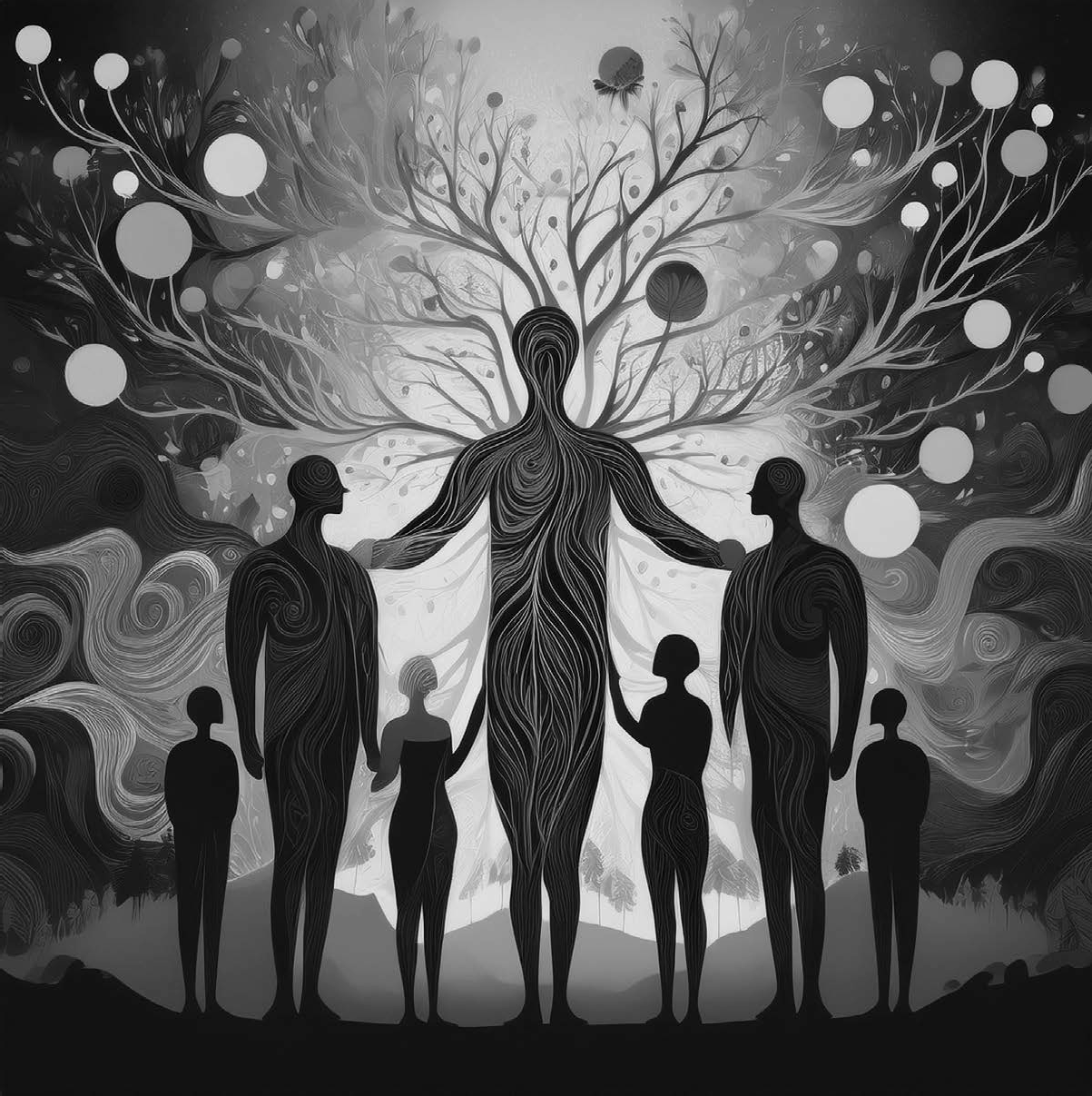
Fig. Representation of Altruism and Cooperative behaviour in Human Societies
Note: Aoki 2017; BioRender 2023.
REFERENCES
A natural history of human morality (2016). Choice Reviews Online 53.
Abid, R., Ghazanfar, S., Farid, A., Sulaman, S. M., Idrees, M., Amen, R. A., Mu-
zammal, M., Shahzad, M. K., Mohamed, M. O., Khaled, A. A., Safir, W., Ghori, I., Elasbali, A. M., Alharbi, B. 2022. Pharmacological Properties of 4′, 5, 7-Trihydroxyflavone (Apigenin) and Its Impact on Cell Signaling Path- ways. Molecules, 4;27 (13): 4304. DOI: 10.3390/molecules27134304.
Ahmad, S., Ali, M. Z., Muzammal, M., Khan, A. U., Ikram, M., Muurinen, M.,
et al. 2023. Identification of GLI1 and KIAA0825 Variants in Two Fami-
lies with Postaxial Polydactyly. Genes (Basel) 14. DOI: 10.3390/genes 14040869.
Ahmad, S., Ali, M. Z., Muzammal, M., Mir, F. A., and Khan, M. A. 2022. The Molecular Genetics of Human Appendicular Skeleton. Molecular Genetics and Genomics 297. DOI: 10.1007/s00438-022-01930-1.
Ahmed, I., Muzammal, M., Khan, M. A., Ullah, H., Farid, A., Yasin, M., et al. 2024. Identification of Four Novel Candidate Genes for Non-syndromic Intellectual Disability in Pakistani Families. Biochem Genet 62. DOI: 10.1007/s10528-023-10556-w.
Alexander, R. D. 2017. The Biology of Moral Systems. New York: Routledge.
DOI: 10.4324/9780203700976.
Ali, M. Z., Farid, A., Ahmad, S., Muzammal, M., Mohaini, M. Al, Alsal- man, A. J., et al. 2022. In Silico Analysis Identified Putative Pathogenic Missense nsSNPs in Human SLITRK1 Gene. Genes (Basel) 13. DOI: 10.3390/genes13040672.
Aoki, S. 2017. Biorender. Biorender. URL: https://www.biorender.com. Apicella, C. L., Marlowe, F. W., Fowler, J. H., and Christakis, N. A. 2012.
Social Networks and Cooperation in Hunter-Gatherers. Nature 481: 497–
502. DOI: 10.1038/nature10736.
Author, P. 2013. The Social Conquest of Earth. Mankind Quarterly 53 (3).
DOI: 10.46469/mq.2013.53.3.6.
Ayaz, M., Muzammal, M., Siraj, S., Fatima, S., Fatima, S., Khan, J., et al. 2023. Genetic Basis of ß-thalassemia in Families of Pashtun Ethnicity in Dera Ismail Khan District of Khyber Pakhtun-Khwa Province, Pakistan. Expert Review of Hematology 16 (9): 693–669. DOI: 10.1080/17474086.
2023.2241639.
BioRender. 2023. Biorender Templates. BioRender.
Birch, J., and Heyes, C. 2021. The Cultural Evolution of Cultural Evolution. Philosophical Transactions of the Royal Society B: Biological Sciences 376 (1836): 20200251. DOI: 10.1098/rstb.2020.0051.
Birch, J., and Okasha, S. 2015. Kin Selection and Its Critics. Bioscience 65
(1): 22–32. DOI: 10.1093/biosci/biu196.
Bourke, A. F. G. 2014). Hamilton’s Rule and the Causes of Social Evolution. Philosophical Transactions of the Royal Society B: Biological Sciences 369 (1642): 20130362. DOI: 10.1098/rstb.2013.0362.
Bowles, S. 2006. Group Competition, Reproductive Leveling, and the Evolu- tion of Human Altruism. Science 314 (5805): 1569–7. DOI: 10.1126/sci ence.1134829.
Butovskaya, M. L., Burkova, V. N., and Karelin, D. V. 2020a. Does Friend- ship Matter? Sharing, Fairness and Parochial Altruism in African Children
and Adolescents. Social Evolution and History 19 (1): 89–112. DOI: 10.30884/seh/2020.01.05.
Butovskaya, M. L., Karelin, D. V., Dronova, D. A., Filatova, V. O., Butovskaya, P. R., and Tishkov, V. A. 2020b. Strategies for Sharing Lim- ited Resources among Children and Adolescents in Three Traditional So- cieties of East Africa: Sociocultural and Genetic Factors. Doklady Biolog- ical Sciences 494. DOI: 10.1134/S001249662004002X.
Butovskaya, M., Rostovtseva, V., Dronova, D., Burkova, V., and Adam, Y. 2022. Variations in Limited Resources Allocation towards Friends and Strangers in Children and Adolescents from Seven Economically and Cul- turally Diverse Societies. Sci Rep 12. DOI: 10.1038/s41598-022-19354-7.
Claidie, N., Scott-Phillips, T. C., and Sperber, D. 201). How Darwinian is cultural evolution? Philosophical Transactions of the Royal Society B: Biological Sciences 369. DOI: 10.1098/rstb.2013.0368.
Clutton-Brock, T. 2009. Cooperation between Non-kin in Animal Societies.
Nature 462. DOI: 10.1038/nature08366.
Cohen, J. 2013. The Social Conquest of Earth, Edward O. Wilson. Journal of General Education 62. DOI: 10.1353/jge.2013.0005.
Darwin, C. 2023). The Descent of Man, and Selection in Relation to Sex. In Science and Sound in Nineteenth-Century Britain: Volume II: Philoso- phies and Epistemologies of Sound. DOI: 10.4324/b23407-16.
Emlen, S. T. 2001. Introduction to William D. Hamilton Symposium. Behav- ioral Ecology 12. DOI: 10.1093/beheco/12.3.261.
Fehr, E., Fischbacher, U., and Gächter, S. 2002a. Strong Reciprocity, Human Cooperation, and the Enforcement of Social Norms. Human Nature 13. DOI: 10.1007/s12110-002-1012-7.
Fehr, E., Fischbacher, U., and Gächter, S. 2002b. Strong Reciprocity, Human Cooperation, and the Enforcement of Social Norms. Human Nature 13. DOI: 10.1007/s12110-002-1012-7.
Gardner, A., West, S. A., and Wild, G. 2011. The Genetical Theory of Kin Selection. J Evol Biol 24. DOI: 10.1111/j.1420-9101.2011.02236.x.
Golya, T. 2005. Bradley A. Thayer, Darwin and International Relations: On the Evolutionary Origins of War and Ethnic Conflict. Politics and the Life Sciences 24. DOI: 10.2990/1471-5457(2005)24[102:batdai]2.0.co;2.
Gul, H., Shah, A. H., Harripaul, R., Abbasi, S. W., Faheem, M., Zubair, M., et al. 2021. Homozygosity Mapping Coupled with Whole-Exome Sequenc- ing and Protein Modelling Identified a Novel Missense Mutation in GUCY2D in a Consanguineous Pakistani Family with Leber congenital amaurosis. J Genet 100. DOI: 10.1007/s12041-021-01310-5.
Hussain, S., Nawaz, A., Hamid, M., Ullah, W., Khan, I. N., Afshan, M., et al.
2022. Mutation Screening of Multiple Pakistani MCPH Families Re-
vealed Novel and Recurrent Protein-Truncating Mutations of ASPM. Bio- technol Appl Biochem 69. DOI: 10.1002/bab.2286.
J. Alsalman, A., Farid, A., Al Mohaini, M., A. Al Hawaj, M., Muzammal, M., Hashim Khan, M., et al. 2022a. Analysis and Characterization of Chi- tinase in Bacillus salmalaya Strain 139SI. Int J Curr Res Rev 14. DOI: 10.31782/ijcrr.2022.141108.
J. Alsalman, A., Farid, A., Al Mohaini, M., Muzammal, M., Hashim Khan, M., Dadrasnia, A., et al. 2022b. Chitinase Activity by Chitin Degrading Strain (Bacillus Salmalaya) in Shrimp Waste. Int J Curr Res Rev 14. DOI: 10.31782/ijcrr.2022.141107.
Khan, K. A., Khan, G. M., Muzammal, M., Al Mohaini, M., Alsalman, A. J., Al Hawaj, M. A., et al. 2022. Preparation of Losartan Potassium Con- trolled Release Matrices and In-Vitro Investigation Using Rate Control- ling Agents. Molecules 27. DOI: 10.3390/molecules27030864.
Krebs, D. L. 2011. The Age of Empathy: Nature’s Lessons for a Kinder So- ciety. J Moral Educ 40. DOI: 10.1080/03057240.2011.541776.
Leigh, E. G. 2010. The Group Selection Controversy. J Evol Biol 23. DOI: 10.1111/j.1420-9101.2009.01876.x.
Lieberman, D., Tooby, J., and Cosmides, L. 2007. The Architecture of Hu- man Kin Detection. Nature 445. DOI: 10.1038/nature05510.
Mohaini, M. Al, Farid, A., Alsalman, A. J., Hawaj, M. A. Al, Alhashem, Y. N., Ghazanfar, S., et al. 2022a. Screening of Anticancer and Immunomodula- tory Properties of Recombinant pQE-HAS113 Clone Derived from Strep- tococcus Equi. Pakistan Journal of Medical and Health Sciences 16. DOI: 10.53350/pjmhs221621100.
Mohaini, M. Al, Farid, A., Muzammal, M., Dadrasnia, A., J. Alsalman, A., Hawaj, M. A. Al, et al. 2022b. Pathological study of Pasteurella Multo- cida Recombinant Clone ABA392. Pakistan Journal of Medical and Health Sciences 16. DOI: 10.53350/pjmhs221621112.
Muzammal, M., Ahmad, S., Ali, M. Z., and Khan, M. A. 2021. Alopecia- mental Retardation Syndrome: Molecular Genetics of a Rare Neuro- Dermal Disorder. Ann Hum Genet 85. DOI: 10.1111/ahg.12425.
Muzammal, M., Ali, M. Z., Brugger, B., Blatterer, J., Ahmad, S., Taj, S., et al. 2022. A Novel Protein Truncating Mutation in L2HGDH Causes L-2- Hydroxyglutaric Aciduria in a Consanguineous Pakistani Family. Metab Brain Dis 37. DOI: 10.1007/s11011-021-00832-2.
Muzammal, M., Zubair, M., Bierbaumer, S., Blatterer, J., Graf, R., Gul, A., et al. 2019. Exome Sequence Analysis in Consanguineous Pakistani Fami- lies Inheriting Bardet-Biedle Syndrome Determined Founder Effect of Mutation c.299delC (p.Ser100Leufs*24) in BBS9 gene. Mol Genet Ge- nomic Med 7. DOI: 10.1002/mgg3.834.
N. Alhashem, Y., Farid, A., Al Mohaini, M., Muzammal, M., Hashim Khan, M., Dadrasnia, A., et al. 2022. Protein Isolation and Separation Techniques of Pasteurella multocidavia One- and Two-Dimen-Sional Gel Electrophore- sis. Int J Curr Res Rev 14. DOI: 10.31782/ijcrr.2022.141208.
Nowak, M. A., Tarnita, C. E., and Wilson, E. O. 2010. The Evolution of Eu- sociality. Nature 466. DOI: 10.1038/nature09205.
Ramsay, M. A. 2005. Darwin and International Relations: On the Evolution- ary Origins of War and Ethnic Conflict (review). J Mil Hist 69. DOI: 10.1353/jmh.2005.0121.
Santos, F. C., and Pacheco, J. M. 2011a. Risk of Collective Failure Provides an Escape from the Tragedy of the Commons. Proc Natl Acad Sci U S A
108. DOI: 10.1073/pnas.1015648108.
Santos, F. C., and Pacheco, J. M. 2011b. Risk of Collective Failure Provides an Escape from the Tragedy of the Commons. Proc Natl Acad Sci U S A
108. DOI: 10.1073/pnas.1015648108.
Seyfarth, R. M., and Cheney, D. L. 1988. Empirical tests of Reciprocity The- ory: Problems in Assessment. Ethol Sociobiol 9. DOI: 10.1016/0162- 3095(88)90020-9.
Smortchkova, J. 2017. The Better Angels of our Nature: Why Violence has Declined. DOI: 10.4324/9781912282531.
Stonerook, E. 2021. The Better Angels of Our Nature. J Am Acad Physician Assist 34. DOI: 10.1097/01.JAA.0000743024.59636.91.
The age of empathy: nature’s lessons for a kinder society (2010). Choice Re- views Online 47. DOI: 10.5860/choice.47-6557
Tomasello, M. 2018. Precís of a Natural History of Human Morality. Philos Psychol 31. DOI: 10.1080/09515089.2018.1486605.
Trivers, R. L. 1971. The Evolution of Reciprocal Altruism. Q Rev Biol 46.
DOI: 10.1086/406755.
West, S. A., Griffin, A. S., and Gardner, A. 2007. Social Semantics: Altruism, Cooperation, Mutualism, Strong Reciprocity and Group Selection. J Evol Biol 20. DOI: 10.1111/j.1420-9101.2006.01258.x.
Yadav, R. S. P., Ansari, F., Bera, N., Kent, C., and Agrawal, P. 2024. Lessons from Lonely Flies: Molecular and Neuronal Mechanisms Underlying So- cial Isolation. Neurosci Biobehav Rev 156. DOI: 10.1016/j.neubiorev. 2023.105504.