
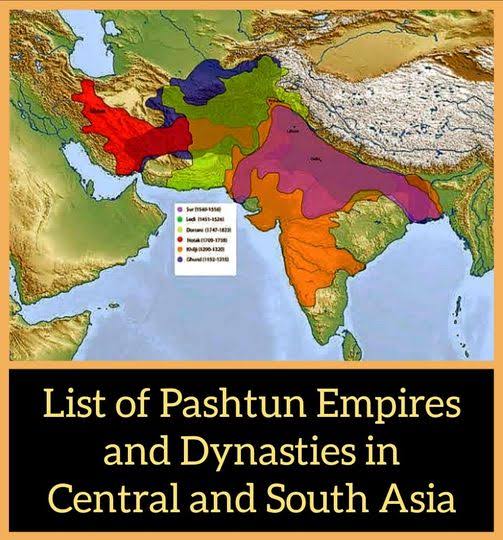
This is one chapter from Tamim Choudhury’s book “My Family History: A Journey From The 1300s.”
What does it take to rule a kingdom? Is it for the highborn, blue-blooded aristocracy or
can one win over sovereignty with grit, tenacity, and the right strategy, or do the stars
need to be aligned for greatness to beam onto you? The Miankhel Lohani tribe from
Afghanistan would have stories to tell you. In the late 1500s and early 1600s, this
Pathan family ruled territories in eastern India, independent of the Mughal Empire. This
was an incredible feat, considering the superpower status of the Mughals. Two
successive Mughal emperors, Akbar and Jahangir, deployed military forces against
them for nearly four decades, with the final battle executed in an imperial scale. Instead
of submitting to Mughal rule, these Pathan chiefs chose to remain as independent
rulers, charting the inevitable in their high-risk life trajectory. This is the story of the
Miankhel Lohani dynasty, mapmakers of their own destiny.
The Origin of the Pathans
Originally from eastern Afghanistan, the Pakhtuns/Pathans are highlanders with a
democratic tribal organization, where the most able person is chosen by the khel or
group. Their lineage is from Qais Abdur Rashid, believed to have been born in 570 AD
and died in 657 AD. His son Sheikh Beitan and family settled on the western side of
Suleiman Mountains. Sheik Bitan’s daughter Bibi Matto married Shah Hussein, a Tajik
who took refuge with her family. As Shah Hussein was not Pathan, this lineage is
referred to as Pathan from the maternal side. Bibi Matto’s descendants include the Lodi
and Lohani tribes, as her son was named Ibrahim Lodi and great-grandson was Luhan.
One of Luhan’s sons was named Miya, after whom came the Miankhel Lohani, as
Pathans named tribes after their ancestry.1,2
This historiography is from Makhzani-i-Afghani, written in 1623 by Nematullah, a scribe
at Mughal Emperor Jahangir’s court. Although the narrative has been questioned by
scholars, it remains the breath of life for many Pathans, and therefore the shajra—
ancestry table—is included here. Pathans for the majority believe in this family tree of
their tribes, which are closeknit, interconnected organizations that form the foundation of
their society.3
The Lohani tribe in medieval Afghanistan had continual seasonal migrations as a
pastoral, nomadic people, spending summers in the Ghazni plateau and winters in
Indus Valley. Their migratory route also became a trading one, running from Central to
South Asia, across Samarkand to Bengal. Horse trading was a springboard to gaining
political power, as Afghan traders controlled the overland supply lines through Central
Asia, becoming an indispensable part of the route regulatory system and trading
arrangements. Hindu merchants and other foreigners also travelled alongside the
Miankhel branch of the Lohanis for their trading activities.4
The Pathans’ Reign Over India
Pathan brilliance frequently illuminated outside the homeland, when they became
captains and kings in far-off lands. Their bravery as servicemembers, shrewdness in
political realism elevated them to high positions in lands outside their own domain. This
began with Sultan Muizuddin Muhammad of Ghor, present-day central Afghanistan,
who conquered northern India and established the Delhi Sultanate in 1206. Although a
Turk himself, his army composed largely of Afghans.3
The Turko-Afghan rulers of the Delhi Sultanate reigned for more than 300 years,
utilizing a Persian administrative system that went all the way up to the shape of the
crown. The Muslim rulers brought a civilizational shift in India; the idea of a singular
deity without idolatry and a rejection of the caste system came into the public
consciousness; the latter attracted lower castes across the land. Sufis became popular
among the masses, as they denounced social inequality.5
The Lodis from Afghanistan initially arrived in India to conduct commerce; so was the
case with Bahlul Lodi’s ancestry, before he gained the Delhi throne in 1451. Sultan
Bahlul Lodi needed a royal ruling class and efficient military skills. Therefore, he issued
a firman, royal decree, asking Afghan tribesmen to come to India with their families and
take up estates there, as the sultan wanted fellow Pathans to support the state against
enemies. The Lohanis were among the tribes to answer this call. The Delhi Sultanate
under the Lodis, a dynastic rule for seventy-five years from 1451 to 1526—changed the
course of history for the Lohani tribe.3,5
Sultan Bahlul Lodi had a longstanding, trusted man from this tribe—Mubarak Khan
Lohani—who gained top rank under this sultanate, being awarded the governorship of
Kara and Manikpur in Uttar Pradesh. He had three sons—Ibrahim Khan Lohani became
governor of Etawa, Uttar Pradesh, from 1479 until 1489, Nasir Khan Lohani was
governor of Ghazipur, Uttar Pradesh, from 1495 to 1525, and Darya Khan Lohani was
governor of Bihar under Sultan Sikandar Lodi in 1495. However, things took a turn for
the worse in 1524, as Nasir Khan Lohani rebelled against the new sultan Ibrahim Lodi,
and was driven away from Ghazipur to Bihar, where his brother Darya Khan Lohani held
the vizier, chief minister title, and had 30,000 cavalry. He also had a poor relationship
with the sultan, who wanted to eliminate him. Upon Darya Khan Lohani’s passing away,
his son Bahar Khan declared independence, calling himself Sultan Muhammad Shah.
During this time, Bihar became a base of resistance for the Afghans.6
Before Sultan Ibrahim Lodi could dislodge the Lohani ruler, he himself was defeated by
Mughal Emperor Babur in 1526. When Bahar Khan Lohani passed away in 1527, his
son Jalal Khan Lohani lost support from many Afghans, who favored a scion of the Lodi
dynasty named Mahmud Lodi, who had arrived in Bihar. In 1529, the youngster Lohani
submitted to Mughal Emperor Babur, who agreed to restore the governorship of Bihar to
him in return of an annual tribute. By this time, Nasir Khan Lohani’s son Mahmud Khan
Lohani joined Emperor Babur’s service as well; the die was cast for the family’s future,
or so they thought.6
Sher Shah Sur Reignites the Delhi Sultanate
During Bahar Khan Lohani’s reign of Bihar, a little-known landholder of Sahsaran under
his service, Mian Farid Sur, gained a military victory against a rival. The Lohani ruler
titled him Sher Khan. However, when he was assigned to run Bihar as a deputy to
Bahar Khan Lohani’s son, Sher Khan Sur usurped power and became the ruler of Bihar
in 1530. Sher Khan ended up marrying Hergusain, the widow of Nasir Khan Lohani, due
to her extensive wealth, a testament to the lengths one will go to for power.6
As Mughal Emperor Babur had already passed away, the Lohanis lost their patron
support and evacuated to Bengal. They were sheltered in the court of Bengal Sultan
Nusrat Shah in Gaur. The Bengal Sultan had married Sultan Ibrahim Lodi’s daughter,
and extended hospitality to all Afghan refugees.6
Mughal Emperor Humayun—the successor—battled Sher Khan Sur for supremacy of
the Delhi throne, but was defeated in 1539. In 1540, Sher Shah Sur gained the Delhi
Sultanate, and once again Bengal became part of its realm. He was sultan for six years.
In 1553, upon his son and successor Islam Shah’s death, Bengal broke away from the
empire, as Sur Governor Muhammad Khan declared independence. In 1555, Mughal
Emperor Humayun took full advantage of the infighting amongst the Pathans and
regained the throne.3,7
The Lohanis had a role in the rise of Sher Khan Sur; they were the ones to give him the
title and position of deputy. As kismet would have it, Sher Khan surpassed his masters
and gained the Delhi Sultanate itself. As the tide turns, this dynasty was not to last.
From the Ashes of Delhi Sultanate Rise an Afghan-run Bengal Kingdom
In 1564, Taj Khan Karrani, who was chief officer of Sher Shah Sur, began another
independently run Afghan-run sultanate of Bengal. By this time the Mughal Empire, the
Turkish/Mongol origin dynasty that ruled most of South Asia, turned its sights onto
Bengal. The Pathan ruler had domain over Bengal and Bihar, and upon his death, his
brother Sulaiman Khan Karrani’s rule extended to Orissa in 1567. He had an army of
40,000 cavalry and 14,000 infantry, alongside 20,000 cannons and hundreds of
warships. When Sulaiman’s son Daud Karrani succeeded the throne in 1572, he
repeatedly engaged the Mughals in warfare, even after concluding a peace treaty with
Mughal General Munim Khan in 1575, where he was allowed to rule as a Mughal
tributary. In 1576, Daud Karrani was defeated in the field of Rajmahal, and executed by
Hussain Quli Khan, the governor of Bengal. This marked the end of the independent
Afghan-run sultanate in Bengal.7,8,9
Qutlu Khan Lohani carves out a minor kingdom out of Bengal Sultanate
During the Karranis’ reign, Afghans across northern India migrated to its eastern side to
become servicemen. Qutlu Khan Lohani was a commander of these armed forces; he
was an exceptional officer who rose to become a ruler himself. For our familial context,
he was also Khwaja Isa Khan Miankhel Lohani’s brother. Upon Sultan Sulaiman’s
conquest of Orissa, he was appointed as a governor at Puri. He was also a general and
trusted counselor in Sultan Daud Khan Karrani’s royal court. In February 1574, the
Mughal army laid siege to the Fort of Patna to defeat the sultan. The sultan managed to
shelter there for three months, when Mughal Emperor Akbar himself came to Bihar, and
captured a subsidiary fort in Hajipur, which provided support to the sultan’s forces. This
is when Qutlu Khan Lohani planned and executed an evacuation, carrying the sultan by
boat in the darkness of night to the capital Tanda. The journey was treacherous as the
river flooded, a bridge collapsed, and the elephants frightened to the point of trampling
over soldiers. Although many lost their lives when fleeing, both the sultan and his
treasures were safely evacuated.9,10
When Sultan Daud was captured at the hands of Mughals, Qutlu Khan Lohani escaped
the battlefield at Rajmahal and took full advantage of the power vacuum. The Afghans
still held Orissa, but no clear leader had emerged. Therefore, he took possession of
North Orissa, advancing towards Hugli and then Mangal Kot, defeating Mughal forces at
both places. Thereafter, Emperor Akbar deployed a vast army, which defeated Qutlu in
1583. Although he submitted for peace, soon afterwards he broke off the offer. As the
Mughals were not prepared for further warfare, Qutlu was left to rule Orissa.11
However, in 1587 he started occupying new places in the Mughal territory and driving
away Mughal faujdars, military governors, from their stations, causing Emperor Akbar to
dispatch General Raja Mansingh to defeat him. Qutlu Khan was an able military
tactician, and took necessary steps to halt the Mughal army’s advance, deploying a
large army to the Fort of Raipur. In a rarity, the colossal Mughal Empire lost this battle to
the minor kingdom held by the Afghans, and Qutlu Khan was formally recognized as the
governor of Orissa. Upon achieving peace with the Mughals, Qutlu Khan dropped
allegiance to the Mughal Emperor, and stopped remitting revenues to the imperial
treasury. He passed away before Mansingh could engage him in battle again;
afterwards the Afghan leaders signed a peace treaty in 1590. His brother and minister
Khwaja Isa Khan Miankhel Lohani was instrumental in maintaining the unstable peace,
until his own death.9,12
The Lohani dynasty is driven out to Bengal
When leadership passed to the next generation, Khwaja Isa Khan’s sons—Khwaja
Sulaiman and Khwaja Usman—relaunched the rebellion against the Mughals. Khwaja
Usman Khan Lohani had already proved his mettle back in 1567, when Sultan Sulaiman
Khan Karrani attacked Orissa, Khwaja Usman was among the nobles posted at Fort of
Sunka Gardh to complete the territorial integration into the sultanate. Now, on their own
volition, the Miankhel Lohani brothers attacked a Mughal ally and captured Jagannath
Temple. In 1591, Mansingh once again went to Orissa. Khwaja Sulaiman and Usman
formed the army’s vanguard to meet the imperial forces, but lost the battle. By 1592, the
Mughal Empire fully controlled Orissa, and thousands of Afghans lost their lives in
battle. In 1593, Orissa was annexed to Bengal, with Raja Mansingh ruling as viceroy
from the Bengal headquarters.6,13,14
Upon defeating the Afghans in Orissa in 1592, Mansingh gave Khwaja Sulaiman and
Usman fiefs in Faridpur District, as he wanted to remove them from this territory.
However, as the Afghan chiefs were heading to East Bengal, Mansingh cancelled the
arrangement, and ordered them to immediately report back to him. This caused the
Afghans to rebel again; on February 1593, they turned toward Bhushna, Faridpur
District, and seized the fort there from the zamindar, feudal landlord, family of Kedar
Rai. This is when Isa Khan Masnad-i-ala stepped into settle the matter.9
Isa Khan was chief of the Bara Bhuiyans, the approximately twelve landlords who
independently ruled Bengal. He asked the Afghan chiefs to return the fort back to Kedar
Rai, the zamindar of Sripur and Bikrampur, and arranged for Khwaja Sulaiman to
become the zamindar’s commander-in-chief. In addition, he gave part of his own land in
Bokainagar, Mymensingh District, to Khwaja Usman, so that he can become a zamindar
in that area. Thereafter, both Afghan chiefs joined Isa Khan in the anti-Mughal
resistance.9
This proves the strategic mastery of Isa Khan; instead of battling the Miankhel Lohani
family, he coopted them into service against the Mughal Empire. He realized that giving
away a portion of the entire district that he ruled would be worthwhile, as he would gain
strong allies in his quest for independence from Mughal rule. One can imagine the
Pathans’ plight; what was once promised as an estate for a livelihood was taken away
on a whim, leading the desperate group to commit raids, probably for the sake of
survival for thousands in the tribe. A generous, firm guidance by Isa Khan provided
tremendous dividends for the Pathans in Bengal who now had a place to stay and a
chance for living well.
As the years passed, in 1596, Mughal General Mansingh deployed an army to conquer
the Fort of Bhushna, which was now headed by Kedar Rai and Khwaja Sulaiman.
During the ensuing battle, Khwaja Sulaiman was killed and Kedar Rai escaped, thus
bringing a closure to the eldest among Khwaja Isa Khan Miankhel Lohani’s sons.9
Khwaja Usman establishes a principality in North Bengal
Khwaja Usman’s best days may have been at Bokainagar, where he was chief of
approximately 20,000 Afghans. He rebuilt an existing fort on the eastern bank of Balua
River, a branch of Brahmaputra. Bokainagar Fort was a mile long east to west, and half
a mile wide, protected by a high earthen wall and deep external moat. A stream flowed
through the fort, and the Pathan chief’s residence was in the southwestern portion.15,21
His family greatly assisted him in maintaining his principality and frequently attacking
Mughal forces. His brothers Wali, Malhi and Ibrahim, sons Mumriz and Yakub and
nephew Dawud were commanders in this area. In 1602, he and his troops crossed the
Brahmaputra River from Bokainagar and drove back Mughal officer Baz Bahadur
Qalmaq of Mymensingh to Bhawal. This led Mansingh to arrive in Bhawal and defeat
Khwaja Usman. Once again, before 1608, Khwaja Usman attacked and occupied the
Alapsingh administrative unit of the Mughals at Mymensingh. After a strong force under
Sheikh Ghiyasuddin recovered the area, he was honored with the title Inayet Khan by
Emperor Jahangir.9
Khwaja Usman’s ongoing battles intensified in 1608, when Islam Khan became Bengal
governor under Mughal Emperor Jahangir, and was tasked with bringing Bengal under
the Mughal Empire. In 1611, he struck against Usman at Bokainagar. At this moment,
Nasir Khan and Darya Khan, two of Usman’s chiefs, defected to the Mughals, causing
him to evacuate to Sylhet. The center of gravity had shifted for the Miankhel Lohani
tribe.16
The Mughal historic account Baharistan-i-Ghaybi mentions that Khwaja Usman had
several daughters as well. They most likely grew up amidst the lush agricultural lands of
Mymensingh. Moreover, it is chronicled that Khwaja Dawud, Usman’s nephew, was an
expert javelineer. He and his relatives may have practiced throwing javelins and
shooting arrows, and tamed the Bengal elephants used in warfare, in these very
grounds. For eighteen years, the Pathan chief had rulership in North Bengal, but had to
evacuate the territory for his refusal to submit to the empire. There were thousands
under his rule, and all moved away from the place they had built their lives and homes.
Imagine settling in one territory and collectively building a principality there, only to
leave for an unknown destination. However, destiny had one more territory for Khwaja
Usman’s reign.
Khwaja Usman gains a minor kingdom in Sylhet
Upon reaching Sylhet, Khwaja Usman seized the minor kingdom of Ita, or Manukula
Pradesh, from Raja Subid Narayan, whose father Bhanu Narayan received the raja title.
This extensive tract of land in South Sylhet gained the status of a small state under
protection of the Tripura kings. The state had the following boundaries: Langla Hills on
east, Manu River on south, Gopla River on West, and Kushiyara River on north. Upon
Khwaja Usman conquering this state, Raja Subid Narayan passed away, his sons
converted to Islam, and were provided zamindaris in the area. Afterwards, Usman
seized Taraf and other areas of Sylhet.17
The fleeting nature of landownership manifests itself; what was once deemed a
birthright for the raja’s sons was provided to them only in small portions by the new
feudal landlord.
Khwaja Usman’s fortified capital was established on a hilly tract at Patan Ushar, in
present-day Maulvibazar District. His brother Khwaja Malhi and son Mumriz were
stationed as commanders in neighboring Taraf.18
Khwaja Usman had a strategic reason behind the conquest of South Sylhet, as Afghan
chief Bayazid Karrani II ruled over North Sylhet at the time. He was connected to the
Karrani dynasty that previously ruled Bengal, and upon the fall of Daud Khan Karrani,
carved out an independent kingdom, with Sylhet Town being his capital. When the
Mughals decided to simultaneously attack both chiefs, Bayazid actually built a
temporary fort on the bank of Surman River as a defense measure. The battle for Sylhet
had begun on 1612.9
Khwaja Usman’s final showdown against the Mughal Empire
When the Mughals pursued Khwaja Usman to Sylhet, the final military operation against
him was organized in an imperial scale. Under Chief Commander Shujaat Khan, high
officers were brought in from outside Bengal. Initially, Usman was asked to surrender,
which he tersely refused. Sujaat’s forces included 500 cavalry, 4,000 musketeers,
elephants, and a fleet of warships. He reached Taraf, South Sylhet, and left a small
garrison there. Reaching the hill pass of Tupia and Putiajuri, the Mughals came across
two forts that were to be guarded by Usman’s third brother Khwaja Wali, but both were
abandoned. On February 1612, one thousand cavalry and musketeers joined Shujaat at
this site.16
The cannons were cast, the swords were forged, and the chainmails were linked as
armor; Khwaja Usman Khan Lohani and his battle-tested tribe, forged in the flames of
decades-long battles, were ready for the final showdown. They had come a long way
since the bygone days of horse trading from Samarkand to Sindh; today, they were to
face off against the most powerful empire in South Asia. Was this a brilliant military
strategy? Not at all, but tell that to the Pathan chief determined to have independence at
all costs. This day would define his legacy for centuries across the history of Bengal.
Khwaja Usman’s forces included 5,200 cavalry, 8,200 paiks, bonded militiamen, and
140 elephants, which marched 12 miles east from Patan Ushar to Dawlambapur, five
miles south of Maulvibazar town. His brother Khwaja Wali commanded the left wing,
and the vanguard was assigned to Khwaja Dawud, son of his eldest brother Khwaja
Sulaiman. Large guns were placed on a raised platform for a battle to commence on
March 12, 1612. A hand-to-hand combat ensued, with Bengal elephants causing
massive damage to the Mughal side. Arrows, bullets, and cannonballs showered the
skies, with the Mughals possessing better artillery and marksmanship. During the
warfare, a Mughal cavalryman pierced an arrow into Usman, causing a fatal wound.
Thereafter, his son Mumriz carried his body to their camp. As the gunsmoke ascended
in the fog of war, the Afghans left the battlefield after midnight, retreating to Patan
Ushar, taking Usman’s body and burying him in a hidden grave. This protracted
campaign removed the last Afghan resistance from the Bengal delta.16,19,20
The cataclysmic clash between the Mughals and Pathas brought an end of an era; the
latter no longer held rule over Sylhet. The minor kingdom would see another ruling
power, as the Mughal Empire’s shadow of sovereignty was cast over Sylhet.
The following day, Khwaja Wali and Mumriz requested a pardon from the Mughals, and
mentioned that if assured safety, would proceed to the royal court to become the
emperor’s faithful adherents. They presented forty-nine elephants and jewelry of the
deceased Pathan chief, upon which Shujaet Khan proceeded to Dhaka alongside his
prisoners, to present them to the governor. Bayazid Karrani II had also surrendered
upon hearing news of the death of Khwaja Usman, and with a heavy heart, handed over
his elephants to the Mughal Empire.9,21
Upon accepting Mughal sovereignty, Usman’s brothers Wali, Malhi, and Ibrahim, and
sons Mumriz and Yaqub, and nephew Dawud all received robes of honor twice.
Usman’s family members were brought before Emperor Jahangir in Agra by Mutaqid
Khan, the diwan, finance minister, of Bengal. Thereafter, the Afghan nobles fully
supported Mughal Governor Islam Khan in maintaining law and order. Afghans from
Khwaja Usman’s group joined a delegation and became associates of Mughal
Commander Mirza Nathan, even assisting him in a military campaign in Assam.22,23
The third generation of the Lohani dynasty gets sidelined
After the war, little is recorded about the Miankhel Lohani family’s third generation.
Khwaja Usman’s son Ibrahim and nephew Dawud both joined Prince Shahjahan’s
rebellion at Bengal in 1624. Moreover, Khwaja Dawud married one of Usman’s
daughters.19, 23, 25
From ruling North Orissa, and then South Sylhet, the family ended up on the sidelines of
Prince Shahjahan’s failed rebellion. The prince’s revolt against his father Emperor
Jahangir lasted more than fourteen months from December 1622 until January 1625,
when he captured Bengal, Bihar, and a portion of Uttar Pradesh. He stayed at
Rajmahal, the capital of Bengal during the 17th century, from where his rebellion
depended on regional allied powers. The prince had Mughal generals, Afghan and
Rajput forces, alongside Bengali zamindars. In late October 1624, the prince was
entangled in a battle on the east bank of Ton River, when the allied zamindars of the
Bengal army and Portuguese captains withdrew their support, leading to his defeat. This
led Prince Shahjahan to eventually retreat to the Deccan, becoming a wandering exile.24
When Emperor Jahangir reasserted his rule in Bengal, the Afghan chiefs that rebelled
earlier became his servicemen. They were already a powerful force in Bengal, and
assisted the empire in removing the Portuguese presence, expanding Mughal frontiers
to Assam and Bay of Bengal. By the 1630s, a once conflicting relationship between the
Mughals and Afghans had evolved into a mutually beneficial one, as the Afghans
realized the benefits of serving the superpower empire.25
The legendary stories continue down the lineage
The Miankhel Lohanis were frontiers-people from a landlocked region. These Pathans
lived and died by the sword. They swayed to the beating drums of war, lives forged in
the flames of combat. Ambition and a keen desire to rule caused both the rise and fall of
the dynasty in eastern India. Qutlu Khan Lohani wanted to succeed Sultan Daud
Karrani, and therefore took over North Orissa at the first available opportunity. The
ruling area may have been approximately 30,000 square miles. He could have
submitted to the Mughal’s supremacy and kept his position as a tributary ruler to the
empire, just as so many minor rulers did so. However, he chose to establish his own
domain, by driving away the Mughal faujdars. Likewise, his nephew Khwaja Usman
could have simply submitted to the Mughals and kept his territory in Maulvibazar, but
chose to go into battle against the empire.
Afghans such as the Miankhel Lohani clan crisscrossed across Bengal and finally
settled in Sylhet as the Mughals kept winning battles against them, pushing this group
to one of the easternmost portions of South Asia. In Sylhet, Khwaja Usman gained a
minor kingdom that was approximately 1,500 square miles, according to my calculations
of the land sizes he conquered. Although he could only hold onto this for approximately
one year, the impact of this conquest is felt to this day. It is said that this Afghan group
married into the local Bengali population down the lineage, leading to many Sylhetis
with strong builds and fair complexion.
Centuries passed and in 2017, a site was marked as Khwaja Usman’s tomb in the
village of Usmangarh at Maulvibazar. This is at the western part of his erstwhile estate,
and the project was the culmination of Khwaja Osman Khan Memorial Implementation
Council’s efforts.26
Today, a few longstanding Sylheti families, such as Ghulam Yazdani Khan’s
descendants, lay claim to Khwaja Usman’s lineage. This family’s ancestor Rahmat
Khan was the son of Khwaja Dawud, according to a published genealogy chart. There
are no structural remnants of the Miankhel Lohani family’s rule in Sylhet; all we have are
their stories. Having listened to the stories from Ghulam Yazdani Khan’s grandchildren,
I can attest that memories keep these historical figures alive. A sense of grandeur
permeates across the dining table when these stories are shared alongside milk-based
chai, harkening to a bygone era of royalty, knights, and forts. Today, the Mughal Empire
is long gone, but the names of these individuals who stood up to this imperial power live
on among their descendants, including the great-grandchildren who are now adults. Be
it a sense of romanticism or nostalgia, as long as their stories remain, they stay with us.
References:
1. Rashid, Haroon. History of the Pathans: Volume I. Pakistan: Printo Graphic, 2005.
2. Rashid, Haroon. History of the Pathans: Volume III. Pakistan: Printo Graphic, 2008.
3. Caroe, Olaf. The Pathans: 550 B.C.- A.D. 1957. London, 1958.
4. Bhat, Javid Ahmed. “Trade, Politics and Nuhani Afghans during the Sixteenth and
Seventeenth Centuries.” International Journal of Creative Research Thoughts.
Volume 9, Issue 7, July 2021.
5. Ray, Aniruddha. The Sultanate of Delhi (1206 – 1526). New York: Routledge, 2019.
6. Siddiqi, Iqtidar Husain. Mughal relations with the Indian ruling. New Delhi, 1983
7. Roychoudhury, Suchira. Gaur: The Medieval City of Bengal c. 1450–1565. Pratna
Samiksha: A Journey of Archaeology, New Series, Vol. 3, ed. 2012.
8. Ullah, MD. “Determining the Contribution of Abdul Karim Searching the History of
Bara–Bhuiyans against Mughal Empire in Bengal.” Saudi Journal of Humanities and
Social Sciences 6, No. 2, p. 78–89, 2021.
9. Chisti, A.A. Sheikh. The Bara-Bhuiyans and Their Times. University of Dhaka, 2013.
10.Hussain, Syed Ejaz. The Bengal Sultanate: Politics, Economy and Coins, AD 1205-
1576. Manohar Publishers and Distributors, 2003.
11.Ray, BC. Orissa Under the Mughals. Calcutta: Punthi Pustak, 1981.
12.Roy, B. Raja Mansingh and the final conquest of Orissa by the Mughals.
Proceedings of the Indian History Congress, 13, p. 243-253, 1950.
13.Yamin, Mohammed. Impact of Islam on Orissan Culture. Readworthy Publications,
2009.
14.Prasad, Rajiva Nain. Raja Mān Singh of Amber. Calcutta, 1966.
15.Jahan, Shahnaj Husne. Bokainagar Fort, Banglapedia, 2021.
16.Sensarma, P. Military History of Bengal. Darbari Udjog, 1977.
17.Sangma, Milton S. and V. Venkata Rao. Essays on Northeast India. New Delhi:
Indus Pub. Co., 1994.
18.Khan, Muazzam. Khwaja Usman. Banglapedia. Dhaka: Asiatic Society of
Bangladesh, 2021.
19.Gommans, J.J.L. Mughal Warfare Indian Frontiers and Highroads to Empire 1500-
1700. Oxon: Taylor and Francis, 2003.
20.Nathan, Mirza. Bahāristān-i-ghaybī. Translated by Dr. M. I. Borah,1936.
21.Stewart, C. The History of Bengal: From the First Mohammedan Invasion until the
Virtual Conquest of that Country by the English AD 1757. Cambridge: Cambridge
University Press, 2013.
22.Jahangir, Nuruddin. Tuzuk-i jahāngīrī. Translated by Alexander Rogers, 1863.
23.Joshi, Rita. The Afghan Nobility and the Mughals: 1526-1707. New Delhi: Vikas Pub.
House, 1985.
24.Roy, Yogendra P. “Rebellion of Prince Shahjahan and his career at Rajmahal.”
Proceedings of the Indian History Congress, 73: p. 231-240, 2012.
25.Faruqui, Munis. The Princes of the Mughal Empire, 1504 – 1719. New York:
Cambridge University Press, 2012.
26.“Five Hundred Years Later, the Marking of Khwaja Usman’s Tomb” (In Bengali).
Boishakhi News, May 20, 2017.